
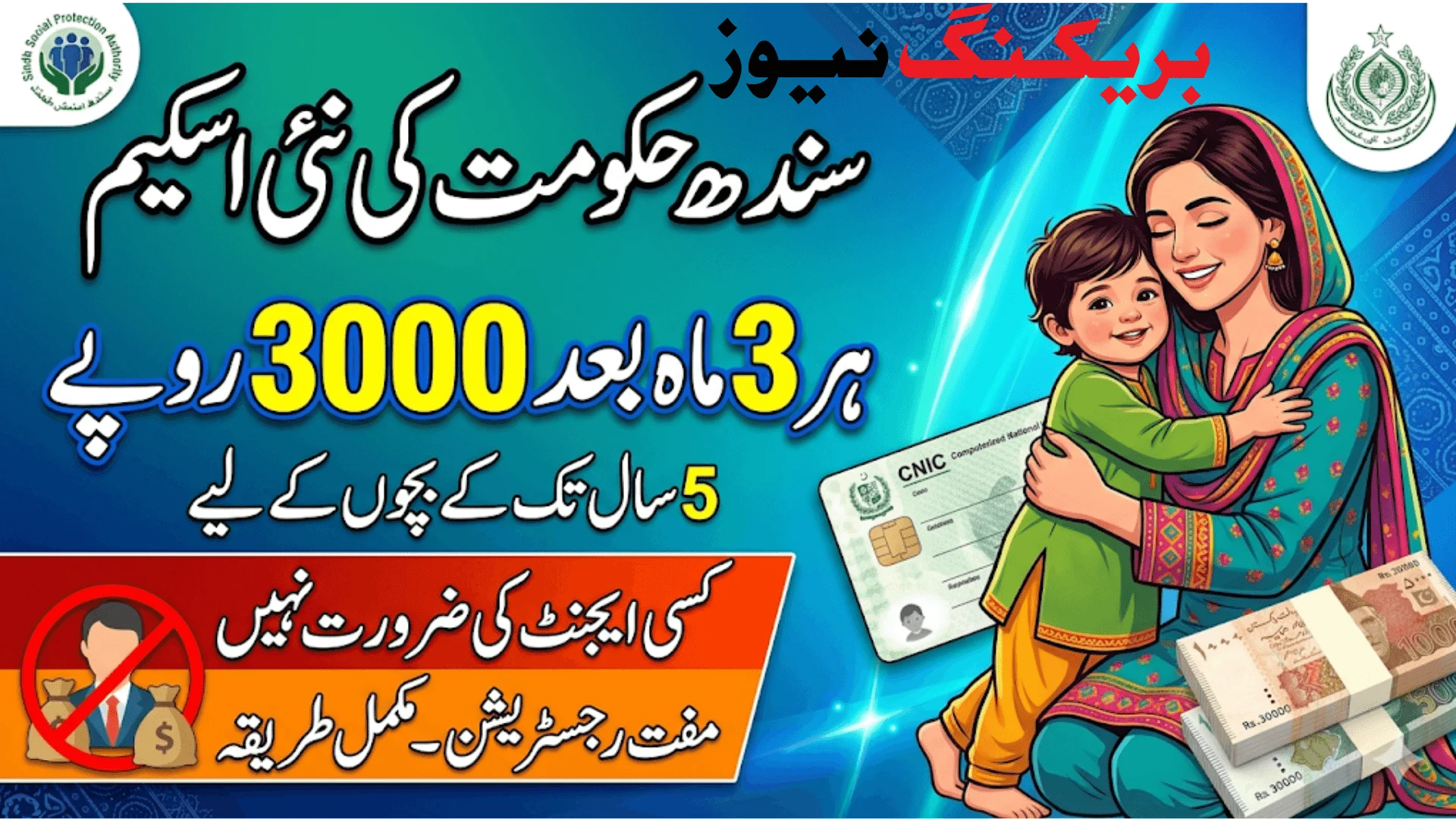
How To Get 3000 Rupees From Sindh Government
Get 3000 Rupees From Sindh Government: The Sindh government has launched a major welfare initiative to support poor and deserving families through a new Early Childhood Development (ECD) Program. Under this scheme, caregivers of children up to five years of age will receive Rs. 3,000 every three months. The financial support is being introduced to help families improve child nutrition, health monitoring, and early education support. This new relief program has attracted huge attention across Pakistan, especially among low-income families searching for ways to get financial assistance through CNIC without paying agents or middlemen.

Many people are also asking whether the registration process is free, who can apply, and how the payments will be distributed. In this detailed guide, you will learn everything about the Sindh Government Rs. 3000 Program, including eligibility criteria, registration details, payment method, required documents, and important instructions for beneficiaries.
Also Read: Petrol And Diesel Prices Updated In Pakistan Today
Quick Information Table
| Program Name | Sindh Early Childhood Development (ECD) Program |
| Assistance Amount | Rs. 3,000 Every Quarter |
| Province | Sindh |
| Target Beneficiaries | Caregivers of children up to 5 years |
| Registration Method | Through Official Government Channels |
| CNIC Required | Yes |
| Funded By | German Development Bank (KfW) |
| Total Budget | Rs. 14 Billion |
| Total Expected Beneficiaries | Around 885,000 Children |
| Payment Frequency | Every 3 Months |
| Main Purpose | Child Nutrition & Development Support |
What Is the Sindh Government Rs. 3000 Program?
The Sindh government approved the Early Childhood Development Program during a meeting of the Sindh Social Protection Authority (SSPA) chaired by Chief Minister Syed Murad Ali Shah. The main goal of this initiative is to financially support families who struggle to provide proper nutrition and healthcare facilities to young children.
Under this scheme, eligible caregivers will receive Rs. 3,000 every quarter. The money will help parents manage child-related expenses such as:
- Nutrition and healthy food
- Child growth monitoring
- Health checkups
- School readiness support
- Early childhood care
The government believes this initiative will help reduce poverty and improve the health condition of children across Sindh.
Also Read: Aghosh Program CNIC Verification 2026 Guide For Punjab Families
Who Can Apply for the Rs. 3000 Sindh Government Assistance?
Not everyone can apply for this financial aid. The Sindh government has introduced specific eligibility requirements to ensure the support reaches deserving families only.
Families may qualify if:
- They belong to low-income households
- They are residents of Sindh
- They have children aged between one month and five years
- The caregiver possesses a valid CNIC
- The family participates in health and nutrition monitoring programs
Preference may be given to families already registered in social welfare databases or poverty support programs.
How to Get 3000 Rupees from Sindh Government Through CNIC
Many people are searching online for the exact process to receive the Rs. 3000 payment through CNIC. Although the government has not yet launched a public online portal for complete registration, officials have confirmed that the assistance will be distributed through official government verification systems.
Follow these important steps:
1. Keep Your CNIC Updated
Your Computerized National Identity Card must be valid and active. Expired CNICs may create problems during verification.
2. Ensure Child Registration
Children should have proper documentation such as:
- Birth certificate
- B-Form issued by NADRA
These records help authorities verify the child’s age and eligibility.
3. Visit Official Registration Camps or Health Centers
The government may conduct registrations through:
- Government hospitals
- Health centers
- Social welfare offices
- SSPA registration points
Families should avoid agents claiming guaranteed registration.
4. Complete Verification Process
Authorities may verify:
- Household income
- Child age
- Residence details
- Health records
Note: Only verified families will receive payments.
Also Read: Punjab Rahmat Card 2026 Application Eligibility, Documents & Complete Process
Important Warning Avoid Agents and Fraud
Many fake agents and scammers misuse government welfare announcements to collect money from poor families. The Sindh government has clearly indicated that official registration does not require extra payment to agents.
Keep these safety tips in mind:
- Never pay money for registration
- Do not share OTP codes with strangers
- Use only official government channels
- Verify all information before submitting documents
- Avoid fake social media pages
Main Purpose of the Early Childhood Development Program
This initiative is not just financial support. It is part of a long-term development strategy aimed at improving children’s lives in Sindh.
The government wants to address:
- Child Malnutrition: Many children in low-income areas suffer from poor nutrition. The quarterly assistance can help families buy healthier food.
- Health Monitoring: Regular growth monitoring helps doctors identify health issues early.
- Education Readiness: Children receiving proper nutrition and care perform better in school later.
- Poverty Reduction: Financial support helps families manage essential child expenses more effectively.
Also Read: BISP 8171 Payment Verification 2026 How To Check Eligibility
Sindh Government’s Partnership with German Development Bank KfW
The program is funded with the support of the German Development Bank (KfW). International partnerships like this help Pakistan improve social welfare programs and child development projects. According to officials, nearly 885,000 children across Sindh are expected to benefit from this scheme. The Rs. 14 billion project is considered one of the major social protection initiatives introduced for early childhood care in the province.
Changes Introduced in the Mamta Program
During the same meeting, officials also approved reforms in the Mamta maternal health cash transfer program.
The Mamta Program currently operates in 22 districts of Sindh and has:
- More than one million beneficiaries
- A budget of Rs. 56 billion
- Maternal healthcare support services
The government also introduced a Hybrid Predictable Payment Model.
Under the updated policy:
- Mothers will continue receiving scheduled payments
- Payments may continue even if health visits are slightly delayed
- Families with older children under two years may still receive partial support
Also Read: How To Verify PM Sehat Sahulat Card Program Eligibility Online Using Official Website
Benefits of the Rs. 3000 Quarterly Assistance
This program can provide relief to thousands of struggling families in Sindh.
Some major benefits include:
- Financial support for poor households
- Better nutrition for children
- Increased healthcare awareness
- Reduction in child health problems
- Support for early learning and development
- Improved living conditions for vulnerable families
The government expects this initiative to create long-term positive effects on public health and education.
Documents Required for Registration
Applicants may need the following documents during verification:
| Required Document | Purpose |
|---|---|
| Valid CNIC | Identity Verification |
| Child B-Form | Child Age Confirmation |
| Birth Certificate | Child Registration |
| Residence Information | Sindh Verification |
Also Read: Sindh Social Protection Initiative 2026 Gives Rs. 3000 Quarterly Cash Relief
How Will Beneficiaries Receive Payments?
Although the complete payment mechanism has not yet been publicly detailed, government assistance programs in Pakistan usually distribute funds through:
- Bank accounts
- Biometric verification systems
- Designated payment centers
- Mobile banking services
Beneficiaries should wait for official announcements regarding payment collection procedures.
Why This Program Is Important for Sindh Families
Rising inflation and economic challenges have made it difficult for many families to afford proper nutrition and healthcare for children. The Sindh government’s ECD program can help reduce some of this burden.
Experts believe investing in early childhood development improves:
- Physical growth
- Mental development
- Future educational performance
- Overall quality of life
Also Read: Punjab Rahmat Card 2026 How Widows & Orphans Can Get Rs. 100,000 Financial Aid
Frequently Asked Questions
Who can get Rs. 3000 from the Sindh Government?
Caregivers of children up to five years of age from low-income families in Sindh may qualify for the program.
Is CNIC required for registration?
Yes, a valid CNIC is necessary for verification and registration.
Can I apply online for the Rs. 3000 program?
Currently, authorities have not fully announced an online registration system. Families should follow official government updates.
Is there any registration fee?
No, official registration is free. Avoid agents demanding money.
How often will beneficiaries receive payments?
Eligible families will receive Rs. 3,000 every quarter.
What is the main purpose of this program?
The program aims to improve child nutrition, healthcare, and early childhood development.
Is this program available outside Sindh?
No, this initiative is specifically launched for Sindh province.
What documents are required?
Applicants may need CNIC, child B-Form, birth certificate, and mobile number.
Final Words
The Sindh Government Rs. 3000 Early Childhood Development Program is an important step toward supporting poor families and improving child welfare across the province. Through this initiative, thousands of deserving households can receive financial assistance for nutrition, healthcare, and child development without paying agents or middlemen. Families should stay connected with official government announcements and avoid fake registration claims circulating online.
Keeping CNIC and child documents updated will help eligible beneficiaries complete the verification process smoothly. As inflation continues to affect household budgets, welfare programs like this can provide much-needed relief while helping build a healthier future for children in Sindh.
Also Read: How To Fix BISP Fingerprint Verification Issue Easily