
Petrol And Diesel Prices Updated In Pakistan
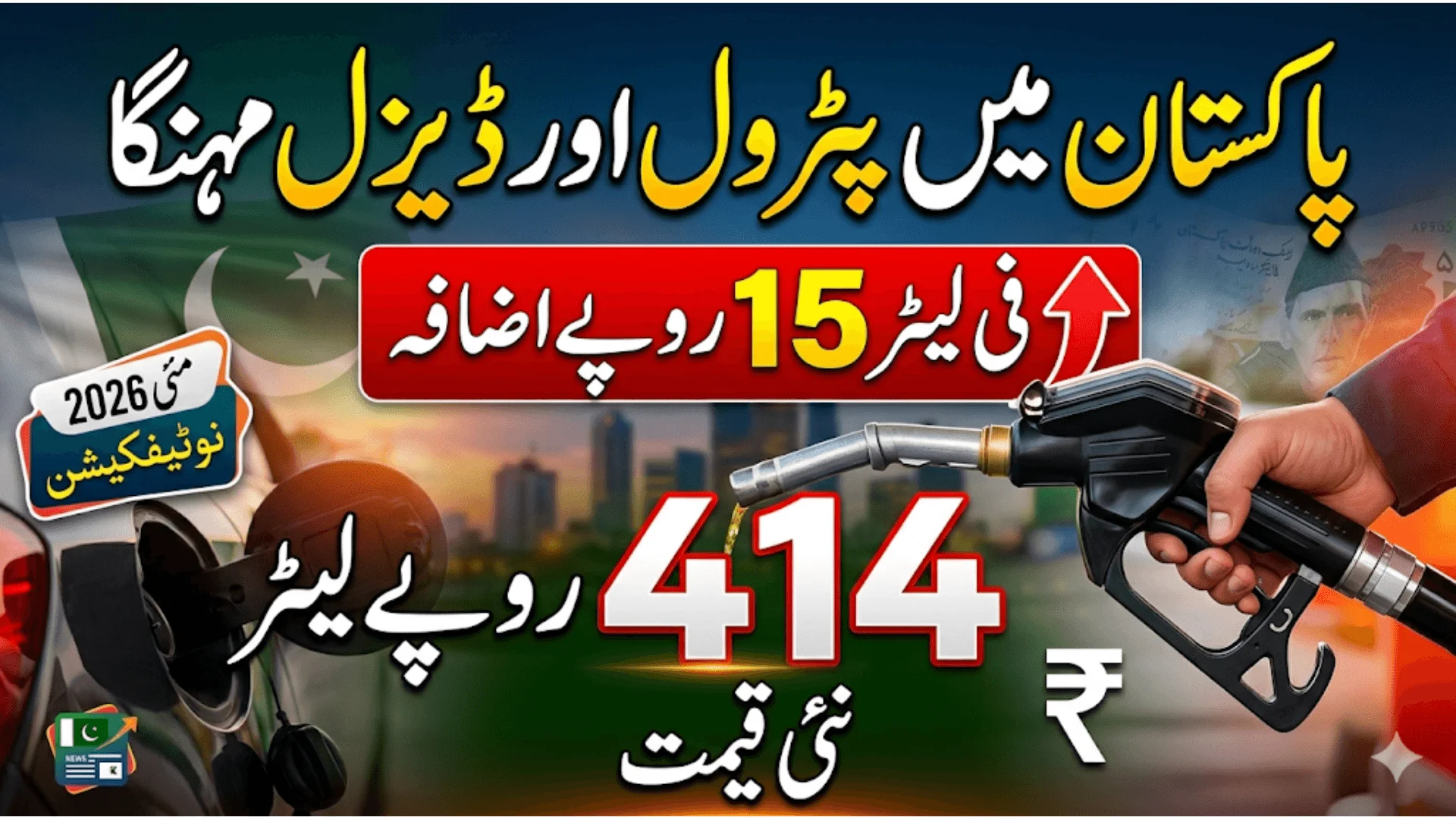
Petrol And Diesel Prices: The Government of Pakistan has once again increased petroleum prices, creating fresh concerns among citizens already struggling with inflation and rising daily expenses. According to the latest update effective from May 9, 2026, both petrol and high-speed diesel prices have been increased by Rs. 15 per litre. After this major increase, the new price of petrol has reached Rs. 414 per litre, while diesel is also now available at Rs. 414 per litre across the country.

This latest fuel price hike has become a major topic of discussion among the public, transporters, businesses, and economic experts. Since fuel prices directly affect transportation, electricity generation, food supply chains, and industrial costs, the increase is expected to create another wave of inflation in Pakistan.
Also Read: BISP Survey Update 2026 Complete Guidelines For Registration
Latest Petrol and Diesel Prices in Pakistan – May 2026
Here is a quick overview of the revised petroleum prices:
| Product | Old Price | New Price | Increase |
| Petrol | Rs. 399 | Rs. 414 | +Rs. 15 |
| Diesel | Rs. 399 | Rs. 414 | +Rs. 15 |
The revised prices came into effect from May 9, 2026, and are being implemented nationwide.
Why Fuel Prices Increased in Pakistan
There are several reasons behind the latest increase in petrol and diesel prices. Pakistan heavily depends on imported petroleum products, and international market conditions directly affect local fuel prices. When global crude oil prices rise, Pakistan also experiences higher import costs. Another major factor is the depreciation of the Pakistani Rupee against the US Dollar.
Since petroleum products are purchased internationally in dollars, any increase in the dollar rate automatically raises local fuel costs. The government also adjusts petroleum levy, taxes, and import margins regularly to manage fiscal targets and agreements with international financial institutions. These adjustments ultimately impact the final price paid by consumers.
Some of the major reasons include:
- Increase in international crude oil prices
- Higher import and transportation costs
- Depreciation of Pakistani Rupee
- Government tax and petroleum levy adjustments
- Economic pressure and IMF-related fiscal measures
Also Read: Aghosh Program CNIC Verification 2026 Guide For Punjab Families
Impact of Petrol Price Increase on Common Citizens
The new fuel prices are expected to affect almost every sector of life in Pakistan. Whenever petrol and diesel prices increase, transportation costs rise immediately. Public transport fares, ride-hailing services, and goods delivery charges usually increase within days. Middle-class and lower-income families are likely to face additional financial pressure because inflation is already at a high level.
Daily-use items such as vegetables, flour, milk, cooking oil, and other groceries may become more expensive due to increased transportation costs. People who travel daily on motorcycles and cars will also experience a major increase in monthly fuel expenses. Small business owners, delivery riders, taxi drivers, and transporters may struggle to manage operational costs after this latest hike.
Expected Increase in Transport Fares
Transport associations often revise fares after fuel price increases. Bus services, vans, loaders, and intercity transport companies are expected to increase ticket prices in the coming days.
Possible impacts on transportation include:
- Higher local bus fares
- Increased rickshaw and taxi charges
- More expensive online ride services
- Rise in goods transportation costs
- Increase in school and office transport fees
This situation may especially affect students, office workers, and laborers who rely heavily on public transport for daily travel.
Also Read: Punjab Rahmat Card 2026 Application Eligibility, Documents & Complete Process
Effect on Inflation in Pakistan
Fuel prices are considered one of the biggest drivers of inflation in Pakistan. A Rs. 15 increase per litre can create a chain reaction throughout the economy. Industries that depend on diesel-powered transportation and machinery will likely increase product prices to cover additional expenses. Experts believe that the latest increase could further push inflation upward during the coming weeks.
Utility bills, transportation, and food prices may all witness upward adjustments if petroleum costs continue rising. Many citizens are already facing financial difficulties due to increasing electricity prices, gas tariffs, and food inflation. The new fuel prices may add further burden on household budgets.
Challenges for Businesses and Industries
Industries, factories, logistics companies, and transport businesses are among the sectors most affected by rising petroleum prices. Diesel is commonly used in heavy transport vehicles, generators, and industrial operations. As fuel costs rise, production and distribution expenses also increase.
Businesses may face challenges such as:
- Increased manufacturing costs
- Higher transportation expenses
- Reduced profit margins
- Expensive raw material delivery
- Increase in market prices of products
Also Read: BISP 8171 Payment Verification 2026 How To Check Eligibility
Public Reaction to the Fuel Price Hike
The latest increase has triggered strong reactions on social media and among the general public. Many citizens believe the government should provide relief instead of increasing fuel prices repeatedly.
People are expressing concerns about:
- Rising inflation
- Increasing transportation costs
- Expensive food items
- Financial pressure on salaried individuals
- Reduced purchasing power
Social media users have also criticized the continuous increase in fuel prices, arguing that it directly affects every segment of society.
How Citizens Can Manage Rising Fuel Costs
Although fuel prices are beyond public control, there are some practical ways people can reduce fuel expenses and manage their monthly budgets more effectively.
Some useful fuel-saving tips include:
- Use public transport whenever possible
- Avoid unnecessary travel
- Maintain proper tyre pressure in vehicles
- Use fuel-efficient driving habits
- Share rides with family or colleagues
- Keep vehicles properly maintained
Motorcyclists and car owners can reduce unnecessary fuel consumption by avoiding aggressive acceleration and keeping engines tuned regularly.
Also Read: How To Verify PM Sehat Sahulat Card Program Eligibility Online Using Official Website
Will Fuel Prices Increase Again?
Future petroleum prices in Pakistan will largely depend on international oil market trends and currency exchange rates. If global crude oil prices continue rising or the rupee weakens further, additional increases may occur in upcoming reviews.
However, if international prices stabilize and economic conditions improve, the government may reduce or maintain current prices in future announcements. Citizens are advised to follow official government notifications and reliable news sources for accurate petroleum price updates.
Economic Pressure Continues for Pakistani Citizens
The latest fuel price increase has once again highlighted the economic challenges facing Pakistan. Rising inflation, expensive utilities, and increasing transportation costs are creating difficulties for millions of families across the country. With petrol and diesel now priced at Rs. 414 per litre, the cost of living is expected to rise further in the coming days.
Many households may need to adjust their monthly budgets and spending habits to cope with the growing financial burden. The government may face increasing public pressure to introduce relief measures, subsidies, or economic reforms to reduce the impact of rising fuel prices on ordinary citizens.
Also Read: Sindh Social Protection Initiative 2026 Gives Rs. 3000 Quarterly Cash Relief
Conclusion
The new petrol and diesel prices effective from May 9, 2026, have added another challenge for the people of Pakistan. Both petrol and diesel have increased by Rs. 15 per litre, taking the new price to Rs. 414 per litre. This increase is expected to affect transportation, inflation, businesses, and household budgets across the country.
As fuel prices continue to play a major role in Pakistan’s economy, citizens remain concerned about future increases and the rising cost of living. The coming weeks will reveal how markets, transport sectors, and businesses respond to the latest petroleum price adjustment.