
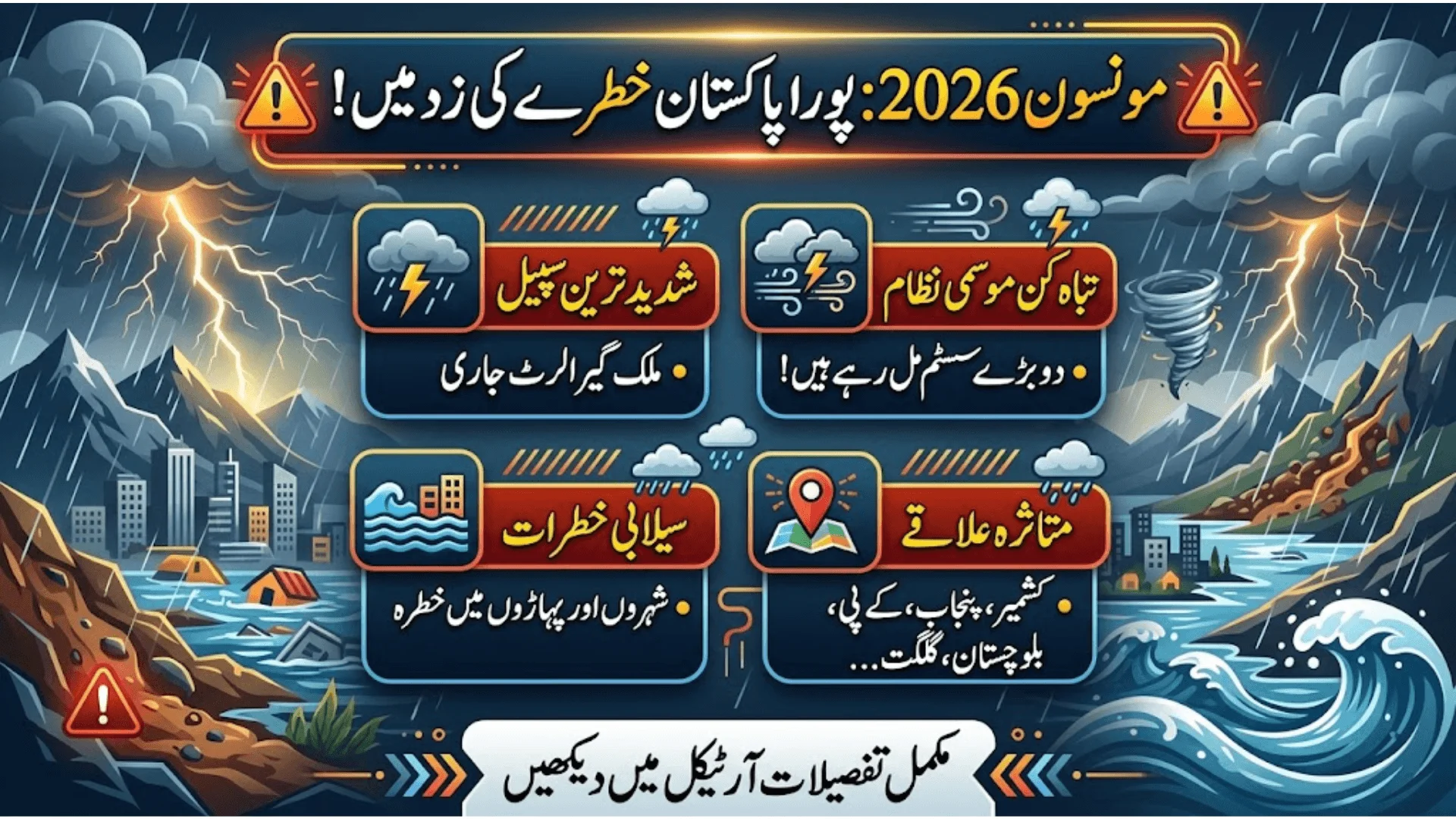
Pakistan Monsoon Rain Alert 2026
Pakistan Monsoon Rain Alert: The Pakistan Meteorological Department (PMD) has issued an important weather advisory regarding the upcoming monsoon spell expected to affect several parts of the country from July 1 to July 6, 2026. According to the advisory, moist currents from the Arabian Sea and the Bay of Bengal are likely to enter the upper and central parts of Pakistan, while a westerly weather system will also influence the country’s weather conditions.

Residents in vulnerable areas have been advised to remain alert as heavy rainfall may trigger urban flooding, flash floods, landslides, and disruptions to daily life. Authorities have also been instructed to remain prepared for any emergency situation.
Also Read: Benazir Kafalat 8171 Program 2026 Ultimate Guide To Check Eligibility & Receive Payments
Quick Information Table
| Details | Information |
| Issued By | Pakistan Meteorological Department (PMD) |
| Issue Date | 29 June 2026 |
| Forecast Period | 1 July to 6 July 2026 |
| Weather System | Monsoon currents from Arabian Sea & Bay of Bengal with a westerly wave |
| Main Concern | Heavy rainfall, urban flooding, flash floods, landslides |
| Most Affected Areas | Kashmir, Gilgit-Baltistan, Punjab, Khyber Pakhtunkhwa, Islamabad, Balochistan |
Expected Weather Situation
- A strong monsoon system is expected to enter Pakistan during the first week of July.
- Moisture from both the Arabian Sea and Bay of Bengal will increase rainfall activity.
- A westerly wave is expected to strengthen the monsoon system.
- Rainfall intensity may vary from moderate to heavy in different regions.
- Thunderstorms accompanied by strong winds are also possible.
- Isolated areas may receive very heavy rainfall.
- Weather conditions may change rapidly during the forecast period.
- Local administrations have been advised to remain prepared.
- Emergency services may remain on alert in vulnerable districts.
Also Read: QR Panic Buttons Now Mandatory Lahore Announces Action Against Non-Compliant Vehicles
Areas Expected to Receive Rainfall
Kashmir
- Moderate to heavy rain with thunderstorms is expected.
- Some hilly areas may experience very heavy rainfall.
- Local streams and nullahs may swell.
- Landslides are possible in mountainous regions.
- Travel on hilly roads should be undertaken with caution.
Gilgit-Baltistan
- Rain and thunderstorms are expected in various districts.
- Heavy showers may occur at isolated locations.
- Mountain roads may become slippery.
- Travelers should monitor weather conditions before departure.
Punjab
- Rainfall is expected in:
- Islamabad
- Rawalpindi
- Attock
- Chakwal
- Jhelum
- Gujranwala
- Gujrat
- Sialkot
- Lahore
- Faisalabad
- Sargodha
- Hafizabad
- Narowal
- Sheikhupura
- Mianwali
- Khushab
- Mandi Bahauddin
- Okara
- Sahiwal
- Pakpattan
- Bahawalpur
- Bahawalnagar
- Rahim Yar Khan
- Dera Ghazi Khan and surrounding districts.
- Urban flooding may develop in low-lying areas.
- Traffic disruptions are possible during heavy downpours.
Khyber Pakhtunkhwa
- Rain with thunderstorms is expected across many districts.
- Heavy rainfall is likely in upper KP.
- Flash flooding may occur in local streams.
- Mountain roads may be affected by landslides.
- Tourists should remain updated on weather conditions.
Balochistan
- Rainfall is expected in northeastern and eastern districts.
- Thunderstorms may accompany rain.
- Flash flooding may occur in seasonal streams.
- Localized water accumulation is possible in urban areas.
Also Read: Nalka Chor, Fan Chor” Punjab Minister’s Shocking Remarks On Teachers
Possible Impacts of Heavy Rainfall
- Urban flooding in major cities.
- Flash flooding in hilly and mountainous areas.
- Overflow of local streams and nullahs.
- Landslides in mountainous regions.
- Waterlogging on roads.
- Traffic congestion.
- Power interruptions due to severe weather.
- Damage to weak structures.
- Reduced visibility during heavy rain.
- Travel delays.
- Disruptions to outdoor activities.
- Possible interruptions in communication networks.
- Agricultural fields may receive beneficial rainfall, but excessive rain could damage standing crops.
- Livestock owners may need to move animals to safer locations.
PMD Safety Advisory
The Pakistan Meteorological Department has advised citizens and relevant authorities to remain cautious throughout the forecast period.
Citizens are advised to:
- Stay updated with official weather forecasts.
- Avoid unnecessary travel during heavy rainfall.
- Keep children away from overflowing drains and streams.
- Do not attempt to cross flooded roads.
- Secure loose outdoor items before thunderstorms.
- Charge mobile phones and emergency lighting equipment.
- Keep emergency supplies readily available.
- Follow instructions issued by local authorities.
- Drive carefully and maintain safe distances during rain.
- Avoid parking vehicles in low-lying areas.
Authorities are advised to:
- Keep drainage systems operational.
- Monitor urban flooding hotspots.
- Ensure emergency response teams remain available.
- Issue timely public advisories.
- Monitor rivers, streams, and vulnerable locations.
- Take precautionary measures in landslide-prone areas.
- Coordinate with rescue and disaster management agencies.
Also Read: Oppo Reno16 F Series Revealed With All-Day Battery And High-Quality 4K Selfie Recording
Why This Monsoon Spell Is Important
- It marks one of the significant monsoon phases of early July.
- Multiple weather systems are expected to interact simultaneously.
- Several provinces are likely to experience widespread rainfall.
- Heavy rain could improve water resources.
- At the same time, flooding risks may increase in vulnerable regions.
- Proper preparedness can significantly reduce potential losses.
- Public awareness remains the key to minimizing weather-related emergencies.
Conclusion
The latest PMD advisory indicates that Pakistan is likely to experience an active monsoon spell from July 1 to July 6, 2026. Rainfall is expected across Kashmir, Gilgit-Baltistan, Punjab, Khyber Pakhtunkhwa, Islamabad, and parts of Balochistan. While the rainfall will be beneficial for water resources and agriculture, it may also increase the risk of urban flooding, flash floods, and landslides in vulnerable regions. Citizens are encouraged to remain informed, follow official advisories, and take necessary precautions to ensure their safety throughout the forecast period.
Also Read: BISP Taleemi Wazaif How To Register Your Child And Get Monthly Education Stipend
Frequently Asked Questions
When will the monsoon spell begin?
The forecast indicates rainfall from July 1 to July 6, 2026.
Which areas are expected to receive heavy rainfall?
Kashmir, Gilgit-Baltistan, Islamabad, Punjab, Khyber Pakhtunkhwa, and parts of Balochistan.
What weather hazards are expected?
Heavy rainfall, urban flooding, flash floods, landslides, and traffic disruptions.
What should people do during heavy rain?
Stay indoors when possible, avoid flooded roads, monitor official weather updates, and follow safety instructions.
Can travelers be affected?
Yes. Mountain roads and highways may become hazardous due to heavy rain and landslides .
Why has PMD issued this advisory?
To inform the public and authorities about expected heavy monsoon activity and encourage timely preparedness.
Also Read: Punjab Boards Result Schedule 2026 Announced Complete Dates For 9th, 10th, 11th & 12th Class Results