
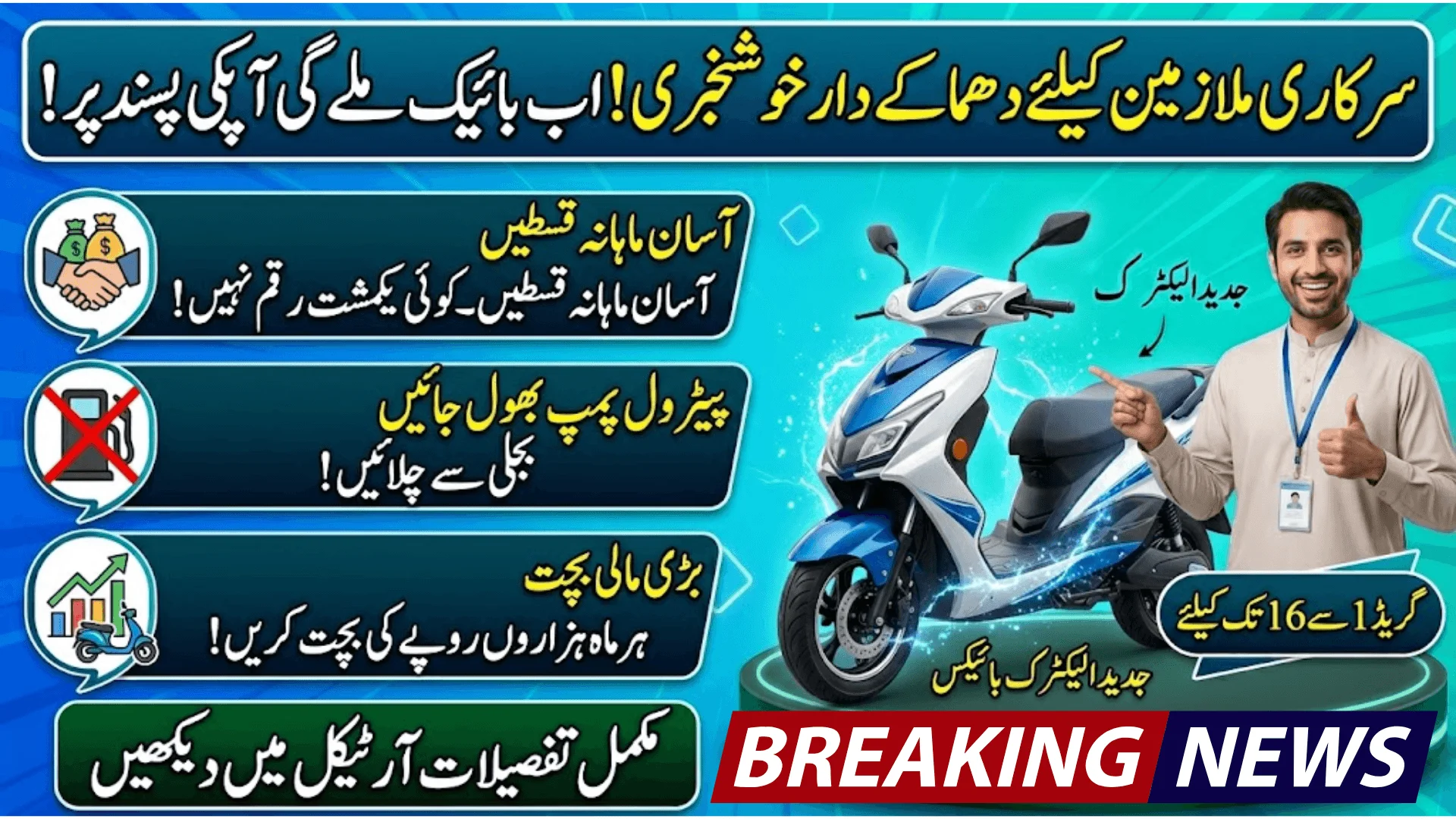
How Government Employees Can Get Electric Bikes
Electric Bikes: Pakistan is entering a new era of clean transportation. For millions of government workers who commute daily on petrol-powered bikes, a major financial relief is on the horizon. Under the country’s National Electric Vehicle (EV) Policy, public sector employees can now access electric bikes through a structured, government-backed program without the burden of paying the full price upfront.
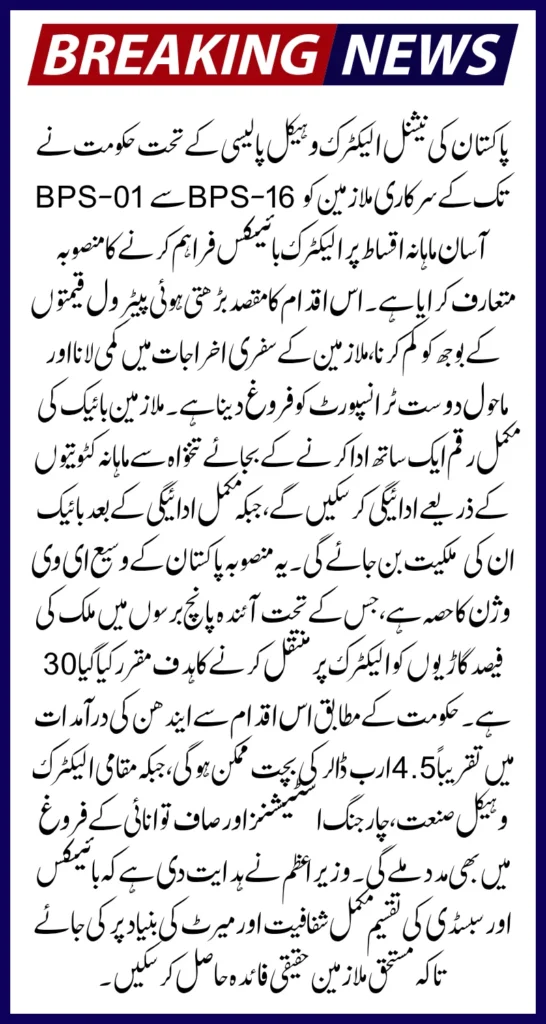
This guide breaks down everything you need to know: who qualifies, how the process works, what financial support is available, and why this initiative could change the way Pakistan moves.
Also Read: How The New Budget 2026-27 Impacts Solar Users, Travelers And Influencers
Quick Information Table
| Detail | Information |
| Scheme Name | Electric Bikes for Government Employees |
| Approved By | Prime Minister Shehbaz Sharif |
| Eligible Grades | BPS-01 to BPS-16 |
| Payment Method | Easy Monthly Installments |
| Policy Framework | National Electric Vehicle (EV) Policy |
| Vehicle Target (5 Years) | 30% of total national vehicles |
| Estimated Fuel Import Savings | $4.5 Billion |
| EV Manufacturing Certificates Issued | 72 (Bikes & Rickshaws), 4 (Cars) |
| Charging Station Applications | 123 Received Nationwide |
| Purpose | Reduce fuel costs, promote clean energy, ease commuter burden |
Why This Initiative Was Needed
Pakistan’s public sector workforce is vast. A significant portion of these employees particularly those in lower and mid-level pay grades rely entirely on personal motorcycles to reach their workplaces. With rising petrol prices eating into already modest salaries, commuting has become a serious financial challenge for many families. At the same time, Pakistan’s dependence on imported fuel strains its foreign exchange reserves every single year.
The government recognized that addressing both problems employee welfare and national energy security required a single, smart solution: accelerating the shift to electric two-wheelers. The Prime Minister’s approval of this scheme is not just a welfare measure. It is a calculated economic move that benefits the individual worker, the national budget, and the environment all at once.
Also Read: Benazir Kafaalat Program New Quarterly Installment 2026 How To Verify
Who Is Eligible?
The scheme specifically targets government employees working in Basic Pay Scales (BPS) 1 through 16. These are the frontline workers, clerks, technicians, assistants, and support staff who form the operational backbone of Pakistan’s public sector institutions.
Key eligibility criteria include:
- Employment Status: Must be a confirmed, regular government employee
- Pay Grade: Must fall within BPS-01 to BPS-16
- Purpose: The bike must be used for personal daily commuting
- Department: Employees from federal and provincial departments are expected to be covered
Employees in higher grades (BPS-17 and above) are generally not the target of this scheme, as the focus is on providing relief to those with limited monthly incomes.
How the Installment System Works
One of the biggest barriers to EV adoption has always been the upfront cost. Electric bikes, while cheaper to run than petrol models, can carry a higher purchase price. The installment plan directly addresses this obstacle.
Here is how the system is designed to function:
- Application Submission: Eligible employees apply through their respective departments or the designated government portal.
- Verification: Employment status and pay grade are confirmed through official records.
- Bike Allocation: Once verified, the employee is assigned an electric bike from an approved manufacturer registered under the National EV Policy.
- Monthly Deductions: The cost is recovered in manageable monthly installments, likely deducted directly from the employee’s salary, making the process hassle-free.
- Ownership Transfer: After full payment, the bike is transferred into the employee’s name permanently.
Also Read: Budget 2026-27 Brings Good News for Government Employees, Armed Forces & Pensioners
The Role of the National EV Policy
The National EV Policy is the master framework that makes all of this possible. It was designed to build an entire ecosystem around electric mobility in Pakistan covering everything from manufacturing to consumer access.
Under this policy:
- Subsidies are available on electric motorcycles to reduce their retail price
- Manufacturing incentives encourage local companies to produce EVs domestically
- Charging infrastructure is being expanded through approved applications
- Import duty relaxations bring down the cost of EV components
The government employee bike scheme fits directly into this framework. By creating guaranteed demand through the public sector, the government is also giving a strong signal to manufacturers and investors that Pakistan’s EV market is serious and growing.
Pakistan’s Bigger Electric Vehicle Vision
This scheme is one piece of a much larger national ambition. Pakistan has set a formal target of converting 30% of all vehicles on its roads to electric power within five years. That includes motorcycles, auto-rickshaws, and passenger cars across both public and private sectors.
The economic rationale is compelling. Pakistan currently imports billions of dollars worth of petroleum every year. A successful EV transition could cut fuel import expenses by an estimated $4.5 billion money that could be redirected toward development, debt reduction, or social spending.
To support this vision, the government has already issued:
- 72 manufacturing certificates for electric motorcycles and rickshaws
- 4 manufacturing certificates for electric cars
- 123 applications for EV charging stations have been received and are being processed
Also Read: Budget 2026-27 Highlights Government Unveils Economic Growth Plan
Benefits for Government Employees
Switching to an electric bike under this scheme carries multiple direct benefits for the employee:
- Lower Running Costs: Electricity costs far less per kilometer than petrol. Employees can save thousands of rupees every month on fuel alone.
- Reduced Maintenance: Electric bikes have fewer moving parts, meaning fewer breakdowns and lower repair bills over time.
- No Upfront Financial Shock: The installment model means employees do not need to arrange a lump sum the cost is absorbed gradually through salary deductions.
- Environmental Contribution: Riding electric contributes to cleaner air in cities, which benefits everyone.
- Long-Term Asset: Once fully paid, the employee owns a modern, low-cost vehicle outright.
Transparency and Accountability Measures
Prime Minister Shehbaz Sharif specifically directed that the distribution of subsidies and bikes must follow a fully transparent process. This instruction was given to prevent favoritism, misuse of funds, or delays that could undermine public confidence in the program.
Departments have been asked to:
- Maintain clear records of applicants and approvals
- Ensure no eligible employee is bypassed unfairly
- Report progress regularly to higher authorities
- Make the application process accessible and simple
This emphasis on accountability is crucial. In past welfare schemes, poor implementation has often diluted the impact of otherwise well-designed programs. The government’s intent here is to ensure that deserving employees actually receive what the policy promises.
Also Read: Pakistan Federal Budget 2026-27 Announces Big Financial Relief Through Tax Reductions
FAQs
Q1: Which government employees are eligible for the electric bike scheme?
Government employees in BPS-01 to BPS-16 are eligible for the scheme.
Q2: Do employees have to pay the full price at once?
No, employees can purchase bikes through easy monthly installments deducted from salary.
Q3: What type of electric bikes will be provided?
Only government-approved electric bikes from certified manufacturers will be provided.
Q4: Is there a subsidy available on the electric bikes?
Yes, eligible employees will receive EV subsidies under the National EV Policy.
Q5: How do I apply for an electric bike under this scheme?
Applications are expected through departments or an official government portal.
Q6: What is the five-year EV transition target?
Pakistan aims to shift 30% of vehicles to electric power within five years.
Q7: How will this scheme affect Pakistan’s economy?
The scheme could save up to $4.5 billion in fuel imports and support the economy.
Q8: What if an employee leaves service before full payment?
Final repayment rules are pending but will follow official government guidelines.
Final Thoughts
The electric bike scheme for government employees is more than a perk it is a policy statement. It signals that Pakistan is serious about reshaping its energy habits, starting from within its own public institutions. For the employee in BPS-7 who rides to work every morning, this could mean hundreds of rupees saved each month.
For the nation, it could mean billions saved each year. And for the environment, it means one less petrol engine burning fuel on Pakistan’s roads. When policy benefits align this well with individual welfare and national goals, the results can be transformative. The key now lies in fast, fair, and transparent execution.