
The New Budget 2026-27 Impacts
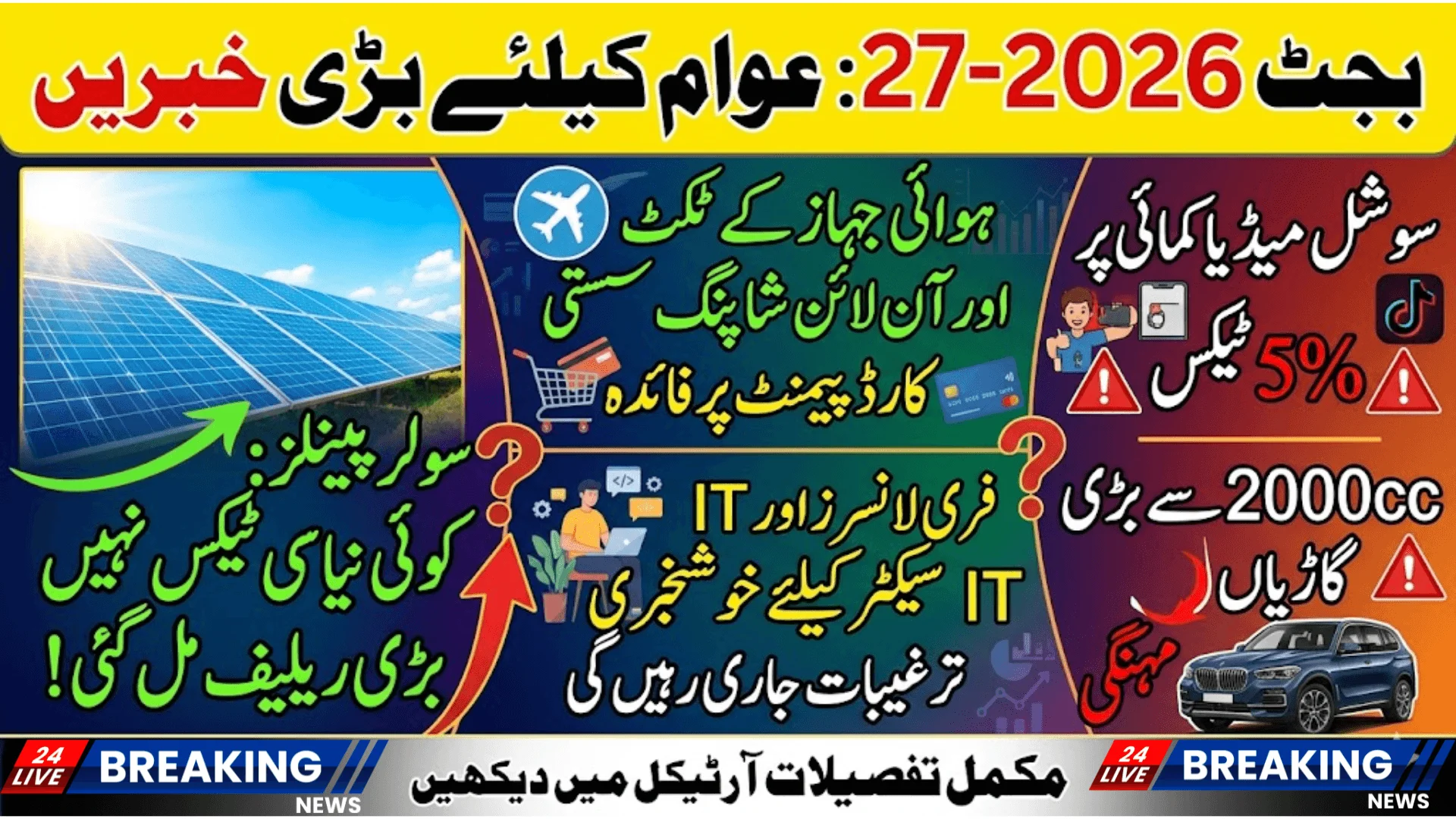
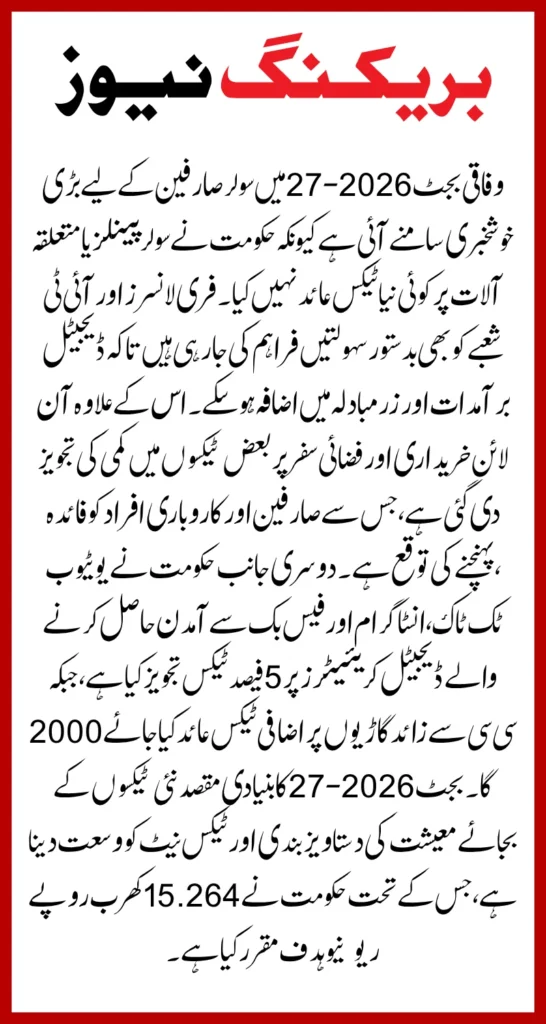
New Budget 2026-27 Impacts: Every year, Pakistan’s federal budget shapes the financial future of millions of citizens. Budget 2026-27 is no different. From solar energy users to content creators, freelancers, online shoppers, and car buyers, this year’s announcements carry significant implications. While some feared new taxes on renewable energy, others wondered whether digital earnings would finally come under tax regulations. The government has attempted to balance revenue generation with economic growth, introducing documentation measures while protecting sectors considered vital for the country’s future.
The budget reflects an effort to encourage formal economic activity without placing excessive burdens on ordinary citizens. Here’s a detailed breakdown of the major changes, what they mean for different groups, and how they may affect daily life and business in Pakistan.
Also Read: Benazir Kafaalat Program New Quarterly Installment 2026 How To Verify
Quick Information Table
| Category | Budget Update |
| Solar Panels | No new taxes imposed |
| Social Media Income | Proposed 5% tax |
| Freelancers & IT Sector | Supportive incentives continue |
| Airline Tickets | Tax reduction proposed |
| Online Shopping | Lower tax rates on card payments |
| Cars Above 2000cc | Additional taxation |
| Revenue Target | Rs. 15.264 trillion |
| Additional Revenue Goal | Rs. 600 billion through compliance |
| Professionals | Existing 15% tax unchanged |
| E-cigarettes | Higher duties imposed |
No New Tax on Solar Panels Relief for Consumers
Rumors about fresh taxes on solar panels had created uncertainty among households and businesses planning renewable energy investments. However, the Federal Board of Revenue clarified during the budget briefing that no additional taxes have been imposed on solar panels or related equipment under Budget 2026-27. This announcement brings major relief to families that rely on solar energy to manage rising electricity costs and power shortages.
Over recent years, rooftop solar systems have become increasingly popular due to higher electricity tariffs and persistent load-shedding. By maintaining the existing tax structure, the government appears committed to supporting renewable energy adoption. Solar energy not only helps consumers reduce utility bills but also eases pressure on the national power grid. For those considering solar installations, the current environment remains favorable for investment and long-term savings.
Also Read: Budget 2026-27 Brings Good News for Government Employees, Armed Forces & Pensioners
Social Media Creators Face Proposed 5% Tax
One of the most discussed proposals in Budget 2026-27 is the introduction of a 5% tax on income generated through digital platforms. This may affect YouTubers, TikTok creators, Instagram influencers, Facebook content creators, and individuals earning through brand collaborations. The government’s objective is to document digital earnings and ensure fair taxation across all sectors. Officials argue that if traditional businesses and salaried employees pay taxes, digital earners should also contribute.
While the proposed rate is relatively low compared to existing tax brackets, concerns remain regarding implementation. Small creators with irregular incomes may find taxation challenging without proper thresholds or exemptions. Details regarding income verification and reporting requirements are still expected as the budget undergoes legislative review. The move indicates that Pakistan’s growing digital economy is gradually entering the formal tax framework.
Digital Income Sources Potentially Affected
- YouTube monetization
- TikTok creator earnings
- Instagram sponsorships
- Facebook content programs
- Paid brand collaborations
- Affiliate marketing income
Freelancers and IT Sector Continue to Receive Support
Unlike social media creators, freelancers and the IT industry appear to have received favorable treatment in the new budget. The government continues to recognize the importance of technology exports and foreign exchange earnings generated by digital services. Freelancers working through international platforms such as Upwork, Fiverr, and Toptal contribute valuable foreign currency inflows into Pakistan’s economy. As a result, policymakers have opted to maintain incentives that encourage the growth of export-oriented services.
The IT sector remains one of Pakistan’s fastest-growing industries, creating jobs and enhancing global competitiveness. Budget 2026-27 suggests that authorities view digital exports as a strategic economic priority rather than a source for additional taxation. This supportive approach may help sustain growth in freelancing, software development, and digital marketing services.
Also Read: Budget 2026-27 Highlights Government Unveils Economic Growth Plan
Lower Taxes on Air Travel and Online Shopping
Consumers also received some positive news through reduced taxes on airline tickets and online purchases made using credit cards. These measures aim to encourage documented transactions and support the growth of Pakistan’s digital economy. Reduced taxation on airline tickets may help make domestic and international travel slightly more affordable for families and business travelers. Meanwhile, lower tax rates on card-based online purchases are expected to promote e-commerce and discourage reliance on cash transactions.
Pakistan’s digital payment ecosystem has been expanding rapidly, and policymakers appear interested in accelerating this shift toward formal financial channels. Encouraging digital payments can improve transparency, increase tax documentation, and foster greater economic efficiency. Together, these initiatives signal the government’s broader commitment to digitization and financial inclusion.
Luxury Vehicles to Face Higher Taxes
Car buyers considering premium vehicles should pay close attention to the new taxation measures introduced in Budget 2026-27. The government has specifically targeted vehicles with engine capacities above 2000cc for additional taxes. These include luxury sedans, SUVs, and high-performance vehicles generally purchased by upper-income groups. Meanwhile, most family cars and commonly used vehicles remain unaffected, helping shield average consumers from higher costs.
This selective taxation strategy allows the government to generate additional revenue while minimizing financial pressure on middle-income households. By focusing on luxury purchases, policymakers aim to create a more progressive tax structure. Therefore, individuals planning to buy standard vehicles may not experience significant changes in pricing due to the new budget measures.
Vehicles Likely Affected
- Luxury SUVs
- Premium sedans
- Imported high-end vehicles
- Cars above 2000cc engine capacity
Also Read: Pakistan Federal Budget 2026-27 Announces Big Financial Relief Through Tax Reductions
Government Focuses on Documentation Instead of New Taxes
A key feature of Budget 2026-27 is its emphasis on documentation and improved tax compliance rather than imposing broad new taxes. The government has set an ambitious revenue target of Rs. 15.264 trillion and expects nearly Rs. 600 billion in additional collections through better enforcement. Officials highlighted that only a small fraction of Pakistan’s traders are currently registered within the tax system. Efforts are being made to bring unregistered businesses into the formal economy without unnecessarily burdening compliant taxpayers.
Authorities have also clarified that small businesses will not face routine inspections without valid financial concerns. The strategy reflects an attempt to widen the tax base, reduce evasion, and strengthen economic transparency. A more documented economy could ultimately improve revenue generation and long-term fiscal sustainability.
Revenue Strategy Highlights
- Target revenue: Rs. 15.264 trillion.
- Compliance-based collection increase.
- Focus on documentation.
- Expansion of the tax net.
- Protection for small businesses.
Other Important Budget Changes
Beyond major announcements, several additional measures deserve attention. Duties on e-cigarette liquids have been increased, reflecting both public health objectives and revenue considerations. Consumers who use vaping products may experience higher prices in the coming months. Meanwhile, professionals such as doctors, engineers, lawyers, and consultants will continue to pay the existing 15% tax rate without facing new burdens under this budget.
These decisions suggest the government has attempted to maintain stability in professional taxation while selectively increasing duties where necessary. Although these changes may not dominate headlines, they affect specific sectors and consumer groups. Staying informed about such adjustments can help individuals and businesses better manage future financial planning and compliance requirements.
Additional Changes
- Higher duties on e-cigarette liquids.
- No change in 15% tax for professionals.
- Stability in professional taxation.
- Selective revenue measures introduced.
Final Thoughts
Budget 2026-27 reflects a balancing act between economic growth and revenue generation. Solar users received reassurance, freelancers and the IT industry retained support, and consumers benefited from certain tax reductions. At the same time, digital creators may soon enter the tax net, luxury vehicle owners face higher costs, and documentation efforts are expected to intensify.
While not every stakeholder will agree with every measure, the budget demonstrates a broader push toward formalizing Pakistan’s economy and improving fiscal sustainability. For households, businesses, and digital professionals, understanding these changes is essential for making informed financial decisions in the year ahead.
FAQs
1. Has Pakistan imposed a new tax on solar panels in Budget 2026-27?
No, the government has confirmed that no new taxes have been imposed on solar panels or solar equipment.
2. What is the proposed social media tax in Pakistan?
The government has proposed a 5% tax on income earned through platforms such as YouTube, TikTok, Instagram, and Facebook.
3. Are freelancers affected by the new budget?
Freelancers and the IT sector continue to receive support, especially those earning foreign exchange through exports.
4. Which vehicles will face higher taxes?
Vehicles with engine capacities above 2000cc are expected to face additional taxation.
5. Has the tax on airline tickets been reduced?
Yes, Budget 2026-27 proposes lower taxes on airline tickets.
6. What is the government’s revenue target for 2026-27?
The government has set a revenue target of Rs. 15.264 trillion.
7. Will small shopkeepers face routine inspections?
Officials have stated that small businesses will not be targeted without specific financial red flags.
8. Are online purchases becoming cheaper?
Lower taxes on credit card-based online purchases may reduce costs and encourage e-commerce growth.
Also Read: BISP Document Verification June 2026 Installment Verify Your Documents