
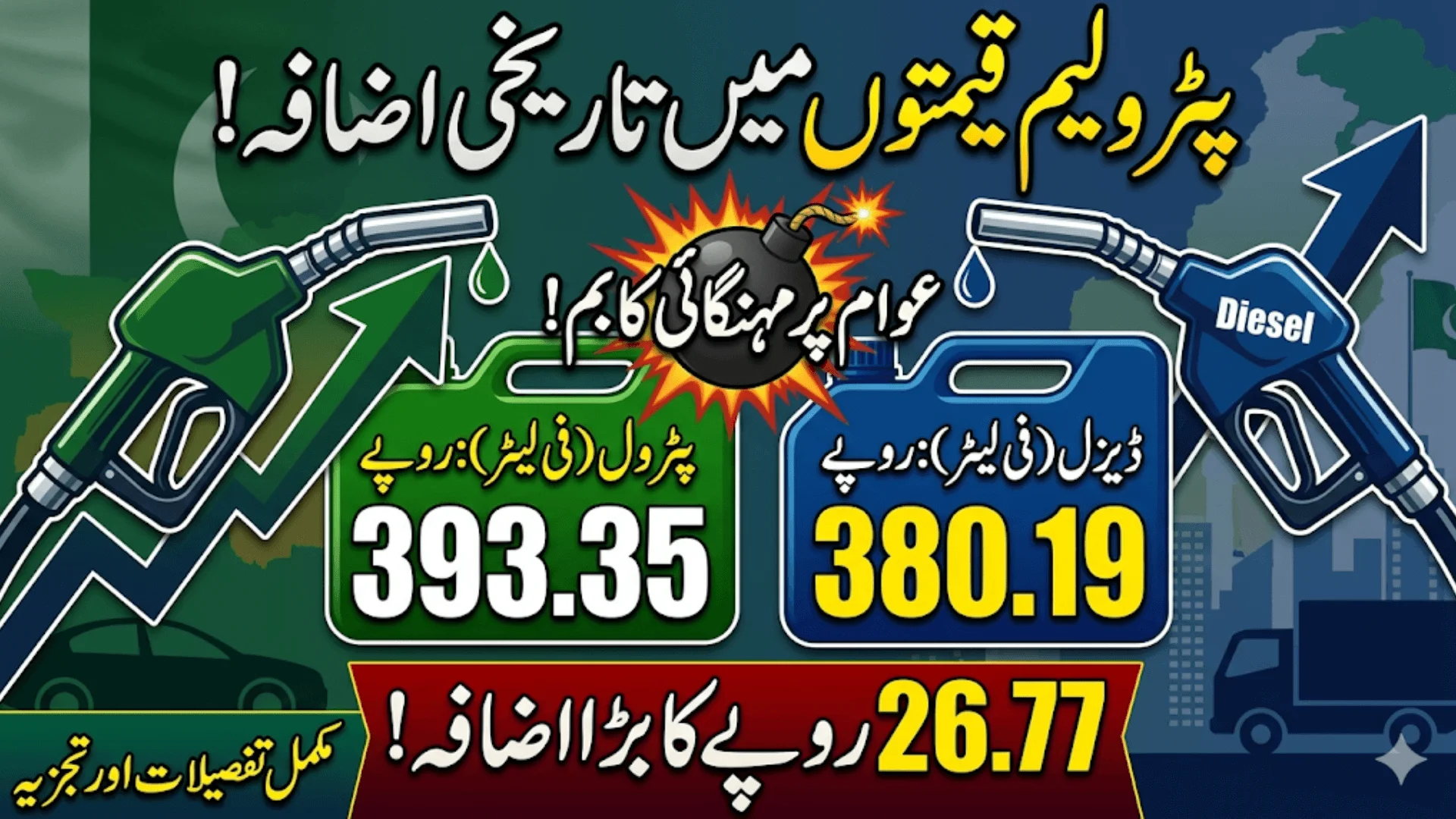
Fuel Prices Hike in Pakistan Petrol At 393.35 and Diesel At 380.19
Fuel Prices Hike In Pakistan: The Government of Pakistan has announced a major increase in petroleum prices, directly affecting millions of citizens. According to the latest update, both petrol and high-speed diesel prices have been increased by Rs. 26.77 per liter. This change comes at a time when inflation is already putting pressure on household budgets, making this decision even more significant for the general public.
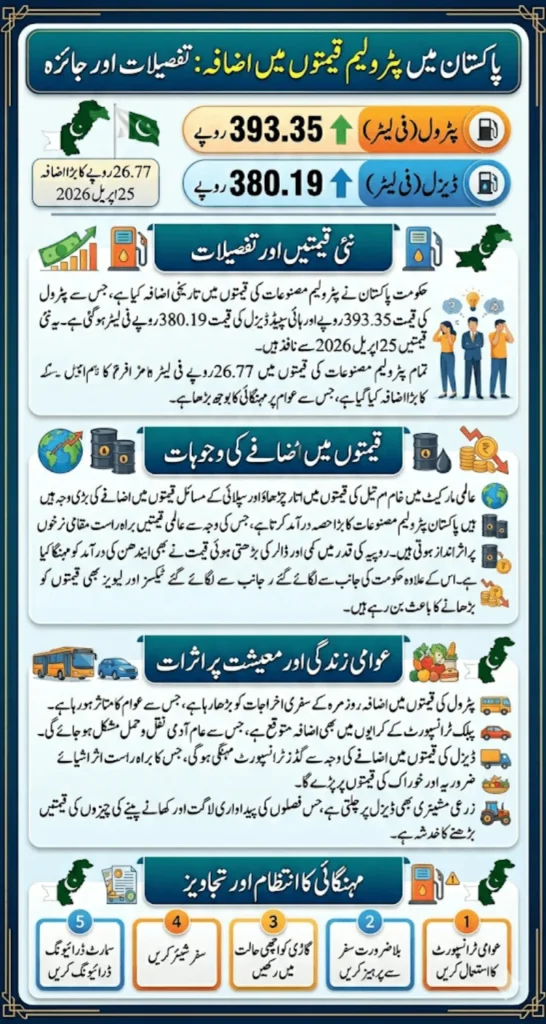
With the new rates effective from April 25, 2026, petrol is now priced at Rs. 393.35 per liter, while diesel has reached Rs. 380.19 per liter. These revised prices are expected to influence transportation costs, goods prices, and overall living expenses across the country.
Also Read: BISP 8171 Tracking System 2026 Verify BISP Payment & Eligibility Instantly
Latest Petrol and Diesel Prices in Pakistan 2026
The revised petroleum rates reflect a sharp increase compared to previous prices. Below is a detailed comparison of old and new prices along with the increase per liter.
| Fuel Type | Price per Liter (Rs.) | Increase (Rs.) | Effective Date |
|---|---|---|---|
| Petrol | 393.35 | 26.77 | 25 April 2026 |
| High-Speed Diesel | 380.19 | 26.77 | 25 April 2026 |
Reasons Behind the Increase in Fuel Prices
The rise in fuel prices is mainly linked to global oil market fluctuations. Pakistan imports a large portion of its petroleum products, which means any increase in international crude oil prices directly impacts local rates. When global demand rises or supply is disrupted, prices increase globally, affecting countries like Pakistan.
Another important factor is currency exchange. A weaker rupee against the US dollar makes fuel imports more expensive. Additionally, government-imposed taxes and levies also contribute to the final price that consumers pay. All these elements combined result in periodic price adjustments.
Also Read: BISP 8171 CNIC Check Online 2026 Complete Guide To Verify Payment Status
Impact of Petrol Price Increase on Daily Life
Petrol price increases directly affect individuals who rely on personal transportation such as motorcycles and cars. Daily commuting becomes more expensive, which puts extra pressure on household budgets. For salaried individuals, this means a larger portion of income is spent on fuel.
Ride-hailing services and public transport fares are also likely to increase. This creates a chain reaction where transportation costs rise across the board. As a result, people may limit travel or look for alternative options to manage their expenses.
Effect of Diesel Price Hike on Transport and Goods
Diesel is essential for heavy vehicles such as trucks and buses. When diesel prices rise, transportation costs for goods increase significantly. This leads to higher prices for essential items like food, groceries, and construction materials.
Farmers are also affected because agricultural machinery relies heavily on diesel. Increased fuel costs raise production expenses, which eventually impact market prices of crops and food items. This creates a broader economic impact beyond just transportation.
Also Read: Saudi Arabia Scholarship 2026 For International Students Step-by-Step Application Guide
Inflation and Economic Pressure on Citizens
Fuel price hikes are one of the major contributors to inflation. When transportation and production costs increase, businesses pass these costs on to consumers. This leads to higher prices for goods and services, making life more expensive for everyone.
In Pakistan, where inflation is already high, such increases make it even harder for low-income families to manage their expenses. Basic necessities become less affordable, and financial stress increases across all income groups.
Government’s Perspective on Fuel Price Adjustment
The government adjusts fuel prices based on recommendations from regulatory authorities and international market trends. These changes are necessary to align local prices with global rates and maintain economic balance.
Officials often explain that such increases are unavoidable due to external factors. However, they also try to introduce relief measures when possible. Balancing economic realities with public affordability remains a complex challenge for policymakers.
Also Read: 8171 Portal CNIC Check Guide Verify Your BISP Payment Status From Home
Public Reaction to Latest Fuel Price Increase
The recent fuel price hike has triggered strong reactions from the public. Many citizens are concerned about rising living costs and reduced purchasing power. Social media platforms are filled with discussions and criticism regarding the increase.
Transporters and business owners are also worried about higher operational costs. Increased fuel prices mean reduced profits and higher service charges. Overall, the reaction highlights the growing financial burden on the population.
Tips to Manage Expenses During Fuel Price Hike
With increasing fuel costs, managing expenses becomes essential. Small lifestyle changes can help reduce the financial impact.
- Use public transport whenever possible
- Avoid unnecessary travel
- Share rides with others
- Keep your vehicle well-maintained
- Drive efficiently to save fuel
These steps can help individuals control their spending and reduce the burden of rising fuel prices.
Also Read: BISP Kafaalat 14500 Payment Guide Check 14500 Status Through 3 Simple Ways
Conclusion
The latest increase in petrol and diesel prices in Pakistan has created widespread economic challenges. With petrol at Rs. 393.35 per liter and diesel at Rs. 380.19 per liter, the cost of living is expected to rise further. This change affects transportation, goods prices, and overall financial stability.
While the increase is influenced by global factors, its impact is deeply felt at the local level. Individuals must adopt smart financial strategies to cope with rising expenses, while policymakers need to explore ways to provide relief. The situation highlights the importance of economic planning and sustainable solutions for the future.
Also Read: BISP 8171 Eligibility Criteria April 2026 And Payment Disbursement Schedule